There are ADVANCED FINANCIAL TOOLS which are even unknown to some experts.
In the world of banking and finance, there are instruments that seem complicated, with strange names like MTN, BG, CD or SBLC.
They respond to tools for securing money, financing projects, and reducing risks.
Before analyzing each one separately, we have created this post for informational purposes so that the general public can understand them, explaining how they work and their use by banks, companies and even governments for large-scale operations, such as high-yield investment programs or financing of international projects.
Before analyzing each one separately, we have created this informative post so that the general public can understand them, explaining how they work and how they are used by banks, companies, and even governments for large-scale operations, such as trading financial products, long-term investments, or as financing, collateral, and risk minimization for international projects.
The good news is that you don’t need to be a banker to understand them: We present simple examples and comparisons so that no prior financial knowledge is necessary.
What are they?
Medium-term debt securities are debt securities issued by companies or banks that allow investors to lend money in exchange for interest. Their term is usually from 1 to 10 years, hence the name “medium-term.”
The issuance of bonds by large companies in Spain to promote investment in strategic infrastructure for the electricity and telephone networks has been an essential tool, backed by the state, especially in the mid-20th century, with significant income tax deductions for investors.
How do they work?
- A company needs money for a project (for example, opening a factory).
- It issues an MTN that says: “If you lend me $1 million, I will pay you an interest of “x”% per year for 5 years and then I will return your money.”
- Investors buy these notes and receive their interest.
Simple example:
Imagine your friend wants to start an ice cream business and asks to borrow €100,000 from you. He promises to pay you back in 5 years at 10% annual interest. That’s basically a small, personal version of a “MT”.
Use in advanced finance:
Banks and large funds use MT to finance complex projects, from renewable energy to large infrastructure programs.
Does it remind you of a loan?
A medium-term note (MTN) isn’t necessarily a different product, but rather a way of structuring medium-term financing. A standard loan is a classic loan with regular payments.
2. SBLC: STANDBY LETTER OF CREDIT (Backing letter of credit)
What is it?
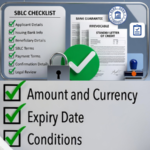
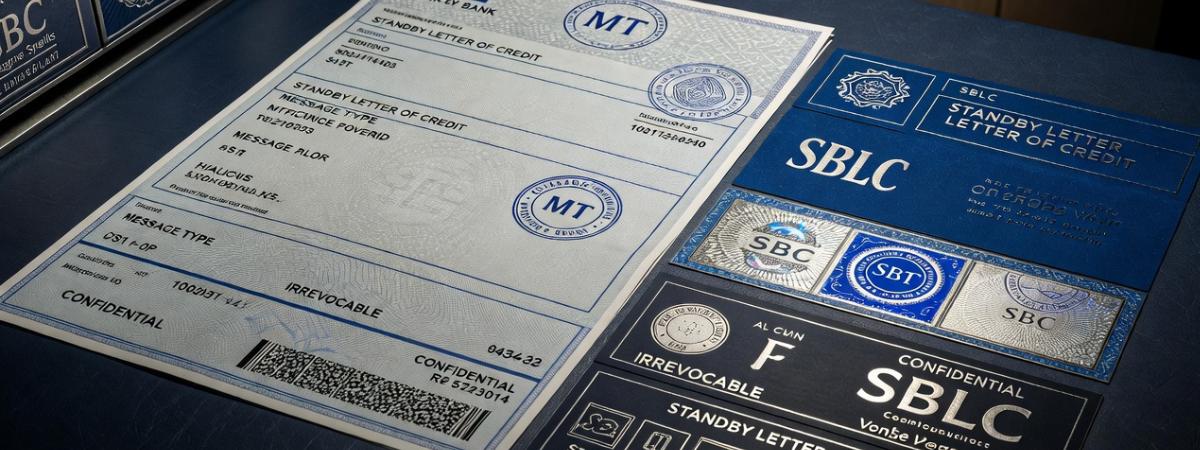
An SBLC is like an “insurance” issued by a bank that guarantees that if someone fails to meet their payment obligation, the bank will do so.
It is issued under international rules, normally regulated by:
- International Chamber of Commerce (ICC)
- UCP 600 or ISP98 Rules
What are its characteristics:
International instrument.
It is executed when the party using it as collateral to obtain financing fails to meet its payment obligations.
- It is executed when the party using it as collateral to obtain financing fails to meet its payment obligations.
- The bank pays if the beneficiary fails to meet the obligations backed by the SBLC.
- It functions as a “payment insurance”.
How does it work?
An example:
- Company A sells products to Company B in another country.
- Company B does not have a reliable credit history, so Bank X issues an SBLC in favor of Company A.
- If Company B does not pay, Bank X covers the payment up to the agreed amount.
Everyday example:
Think about renting a home. You sign a contract, but the landlord wants a guarantor in case you don’t pay. You go to a bank, and they guarantee the payment. That’s a small-scale SBLC.
Importance in high performance:
- It allows for large-scale operations without exposing partners to risks.
- It facilitates access to larger credit lines and international financing.
- Widely used in:
- Foreign trade
- International contracts
- Large projects
- It is independent of the main contract (principle of autonomy).
What is the difference with a conventional guarantee?
The difference between an SBLC (Standby Letter of Credit) and a conventional guarantee lies mainly in its legal structure, international scope and form of execution.
- SBLC = International structured and documentary bank guarantee.
- Conventional guarantee= Traditional guarantee regulated by local legislation.
What are they?
A counter-guarantee is a guarantee on another guarantee. If bank A guarantees a payment for a customer, it can require another bank or entity to back that guarantee.
It is used a lot in schemes such as:
- Private structured transactions.
- Non traditional project finance.
- International commerce.
- Big projects.
How do they work?
- Bank A issues an SBLC for Company X.
- Bank A wants to make sure it doesn’t lose money, so it asks Bank B or a financial institution to back that SBLC.
- If something goes wrong, the backup from Bank B, or the financial institution, is activated and Bank A is protected.
Everyday example:
If your friend guarantees someone else’s loan with you, but asks you to have someone else sign to cover you in case your friend defaults, that’s a counter-guarantee.
Why are these tools used?
- They reduce risks: Nobody wants to lose large sums of money on international projects.
- They facilitate financing: They allow companies or projects to access capital that they would not otherwise obtain.
- They enable complex operations: High-performance programs, international investments, or infrastructure projects depend on these tools to ensure the flow of money.
In high-performance operation, it is protected against: Risk of the instrument being fake or operational risk in complex structures.
A simple real-world example:
Large energy projects, such as solar farms in Africa or highway construction, often use SBLC and MT to ensure that contractors and suppliers receive reliable payments.
What is the difference between a double guarantee and a traditional transaction?
The difference lies in the purpose, the risk, and the legal structure.
Conclusion:
Although names like MT, SBLC, and counter-guarantees may sound intimidating, they are essentially ways to secure money and reduce risk in the financial world. They are used for:
- Funding high-performance projects.
- Protecting investors and banks from defaults.
- Making large international transactions possible and secure.
In summary:
Think of them as insurance for your money, a way to lend money with guarantees or to back someone in a financial transaction, but on an international scale and with millions of euros or dollars at stake.
Of course, all this is just the foundation… because its use then becomes more complex and requires specialists who know the entire protocol to follow, how the guarantees are formulated, how they are obtained, or what the fees are that each party must take.
We will provide more information later. You can also explore further by clicking on the links.
SINGULAR has staff knowledgeable about these instruments, and they can help you formulate them, supporting you throughout the entire process.
*This post is owned by TODO ES SINGULAR, SL (https://todoessingular.com/en/) and the information contained herein may be used by third parties with the express written authorization of the source.