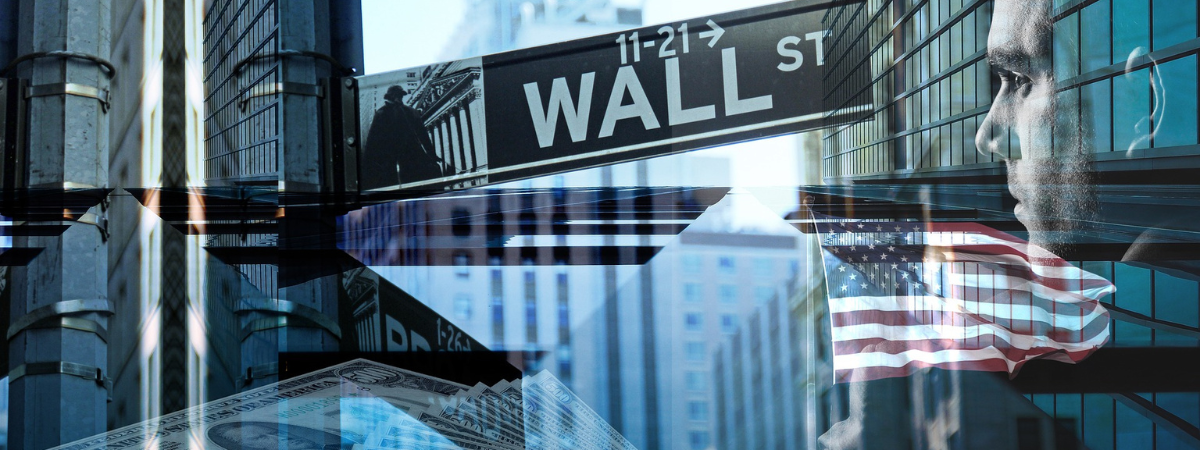
We mention the financial system and immediately WALL STREET comes to mind, USA, men dressed in black and wearing ties (not to be confused with MEN IN BLACK (who, although they also wear similar outfits, deal with more fun extraterrestrials), few women (I wonder why?), briefcases, multimillion-dollars, strange names of products that are bought and sold… and a lot of handling of what is supposed to be the world economy.
The Americans had something to do with the current financial system as we know it, but they are not the inventors of the system, much less of economics… even though it may seem that everything related to money comes from there.
It has roots that extend to ARISTOTLE (or one of his students) who carried out analyses on value and money; the Spaniards of the SCHOOL OF SALAMANCA who established the first modern economic theories in the 16th century, defending private property, or the PHYSIOCRATS Frenchmen who defended the 18th century LAISSER FAIR or free market, with the first systematic economic theory.
ADAM SMITH is recognized, thanks to his work THE WEALTH OF NATIONS (1776), as the modern father of economics, speaking of market economy and individuals.
He was Scottish, but because he spoke English, he seemed like he was American.
There are others, like KARL MARX, JOHN MAYNARD KEYNES, MILTON FRIDMAN and MUHAMMAD YUNUS, and established theories with all kinds of orientations.
There have always been crises: THE GREAT DEPRESSION OF ’29, THE DOT-COM COLLAPSE in 2000, the OIL CRISIS in 1973, or a hundred years earlier, in 1873, the one that affected EUROPE AND NORTH AMERICA.
The one we want to talk about is different. It’s planetary, and it’s approaching stealthily, although at more than one point it resembles the ones we’ve mentioned.
This one we owe especially to the Americans as protagonists and to their acolytes and friends, almost their universal representatives, as secondary actors repeating interpretations similar to those of other times.
But before getting into the crisis, it is necessary to introduce the current financial system and understand its basics.
We are about to enter 2007 and the financial system can be defined as that set of institutions (public and private) and legal instruments that make the functioning of the world economy possible through financial markets.
The concepts:
For those unfamiliar with the terminology, we will try to explain it simply:
Markets, economic resources, surplus and deficit:
Markets are structured by channeling economic resources between those economic units with surplus funds, that is, with a surplus (suppliers or lenders, in short, those who have excess money) and those economic units that need funds, or in other words, with a deficit (demanders or borrowers, in short: those in need of money).
Spending and saving:
This is how the real economic activity of producing and consuming is carried out, or in other words, generating spending, which is the basis for sustaining the financial system and, therefore, the need for necessary savings, through which said spending is channeled.
Spending and saving are the two concepts on which the whole system pivots, and this has been the case for hundreds of years… regardless of the system that prevailed at any given time.
Spaces, financial products and payment systems according to supply and demand:
The savings movement materializes in physical or virtual spaces through financial products and payment systems (for example: loans, shares, bonds or bank deposits) that define their prices based on supply and demand.
The banks, the claimants, and those with money (buyers):
Banks generally market these products and, contrary to popular belief, are not the ultimate holders of money but rather intermediaries between the actors in the financial system, that is, the demanders (those people in need of money) and those who have the money (on whose behalf the bank acts), who in the financial market are called buyers (as will be explained later) who are the ones who offer cash in exchange for a promise of future repayment of the debt generated, plus interest or profit in their favor.
Normal economy and real economy:
You might find it difficult to understand the terms when reading this, because in normal economics—the everyday kind—nobody calls those who lend money “buyers,” but in the real economy that’s what they have to be called because they—to use an example that anyone can understand—buy the title to a mortgage that the bank has given to your friend, and they have the power to reclaim it in the future.
- The bank is the intermediary (the one who facilitates the mortgage).
- The plaintiff is the one who has requested the mortgage (whose value is the amount that has been lent plus the profit that the bank will take in the form of interest).
- The buyer is the one who owns the title (buys the debt that the claimant has through the intermediary, or in other words, buys your friend’s mortgage from the bank).
- Debt buyers are those who provide the bank with money, whether they are its own shareholders or other wealthy individuals, through highly sophisticated products.
Under this financial protocol operates what is known as the primary financial market, which is where the everyday economy of citizens and businesses takes place.
Debt holders and the secondary market:
The owners of the debt introduce these products (the purchased debt) into a new market (the secondary market) where they are resold in order to obtain immediate liquidity in their favor.
In other words, the debt is placed in that other market to make cash immediately.
Continuing with the same example:
- Your friend’s mortgage is worth 20,000 euros + 5,000 euros in interest after 5 years.
- The debt owner (the buyer) puts the debt on the secondary market and resells it, for example, for 23,000 euros instead of 25,000 euros.
- The buyer obtains liquidity from moment zero:
- He gets his money back (20,000 euros) and a profit (3,000 euros instead of 5,000 euros) almost instantly.
- The benefit remains the sale of securities packages justifies the essence of the secondary market.
- The bank may act as a financial intermediary (and receive a payment for doing that work).
- The new buyers (those who repurchase the future promise of payment from those who have received the money and are therefore the new owners of the debt) will collect the interest or profit:
- According to the previous example, the 25,000 euros will be taken after 5 years.
Speculative economics:
The result is a speculative, quasi-virtual economy, based on future promises of repayment of the money that has been lent (securities or products), which grows following the same protocol, over and over again, always making a profit on each resale… at least until liquidity prevents it or the product ceases to be of interest to the market.
The Stock Exchange:
The Stock Exchange is the best-known tool for facilitating the purchase and sale of these securities or products… over and over again.
The over-the-counter parallel market and how it works:
There are also over-the-counter transactions in unorganized parallel markets, where unique financial instruments are designed and traded, with tailor-made contracts between two parties (for example: shares, bonds, commodities, swaps or credit derivatives).
In the over-the-counter parallel market, even more sophisticated financial products are offered, with instruments designed to meet the needs of states or large corporations, involving enormous sums and equally astronomical profit margins. Furthermore, financial risks are reduced for the lender because additional guarantees and counter-guarantees are required, generally linked to valuable assets held by these states or corporations. In this way, the client’s future—whether states (and consequently, their citizens) or corporations (and consequently, the market)—is compromised in case of default. In other words, the future is “mortgaged” to cover present needs, with everything necessary being put on the table.
Guarantees and new speculative products:
Furthermore, the guarantees do not remain hidden away, but come back into play, being used in new operations in a more speculative pyramid system, becoming new products that, in addition to giving more and more additional benefits to the lender, can distort the foundations of the economy… to the point that distortions can occur that result in crises that can become global.
If a pyramid were drawn, the horizontal line supporting the triangle would be the primary market, and the rest, with its enormous volume, would be the secondary market and parallel markets.
In short, the pyramid image is a good reflection of the real financial system.
Rockefeller:
And ROCKEFELLER knew a lot about this, he was the one who installed it in a model of savage capitalism in the early years of the 20th century.
I’m sure the surname is familiar to anyone reading this.
Commodity vs. money vs. state vs. citizenship:
Merchandise is defined as anything that can be sold or bought, that is, exchanged for “something else”.
The financial product has the category of commodity in a market economy and, in economic terms, that “something else” is money.
Money must meet three criteria in an economic system:
- It must be a means of exchange
- It must be an accounting unit
- …And it must be a value conservator.
Modifying any of these three criteria is unacceptable for the financial system as we know it today (in ten years, and with the impact of virtual money or Fintech, things will be different, time will tell… but that’s another story).
Citizenship as a foundation:
The Law states that citizenship is the foundation and ultimate goal of the financial system, since the financial market must guarantee citizens’ access to goods and services in the form of merchandise.
The welfare state:
The State, through the Law, must regulate, organize or ensure the functioning of the financial system and in case of a breakdown must protect the common good.
And all of this is regulated by law in modern states for the good of those women and men who make up the state.
At least in states that call themselves democratic and in capitalist economies:
Big Brother State looks after our interests.
However, one might ask whether the State, and especially its representatives, always prioritize the common good, or whether it is possible that, in a perverse, self-serving, or forced manner, they could take a partisan stance towards one side or the other.
Since the State is made up of people, who will ultimately have to answer for their decisions, what really happens in a moment of fracture?
*This post is owned by TODO ES SINGULAR, SL (www.todoessingular.com) and the information contained herein may be used by third parties with the express written authorization of the source.