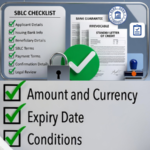
An SBLC (Standby Letter of Credit) is a financial instrument issued by a bank that guarantees payment of the nominal amount upon maturity. It can be used as an investment instrument (such as a Certificate of Deposit) or as collateral to obtain financing or guarantee funds that a developer can put towards a project.
In any case, an SBLC is a guarantee of payment upon maturity to the beneficiary thereof, whether the original investor or another beneficiary to whom the letter has been sold or endorsed.
If the original beneficiary has assigned it for use as collateral, either by itself or through a third party, and the latter fails to comply with the contractual commitment (e.g. a payment), the issuing bank undertakes to pay the beneficiary in accordance with the terms set out in the letter.
If the customer fails to comply with the contractual commitment (e.g. a payment), the issuing bank undertakes to pay the beneficiary in accordance with the terms established in the letter.
SBLCs are generally regulated by the international rules of the INTERNATIONAL CHAMBER OF COMMERCE (ICC), particularly under UCP 600 (Uniform Customs and Practice for Documentary Credits) or ISP98 (International Standby Practices).
Although originally designed as commercial guarantee instruments, in certain financial environments they are used for monetisation processes, i.e. to obtain liquidity from their nominal value.
1. Who are the parties involved and what is their role?
1. Applicant:
The party requesting the issuance from the bank. Must provide collateral.
2. Issuing bank:
Issues the SBLC and assumes the payment obligation.
3. Beneficiary:
The person who receives the SBLC as collateral.
4. Receiving or advising bank:
Notifies the beneficiary of receipt.
5. Confirming bank (if any):
Adds its guarantee to the instrument.
6. Monetiser or structuring fund:
Entity that accepts the SBLC as collateral and provides liquidity.
7. Intermediaries/brokers:
Connect the parties. They must not have control over funds or SWIFT.
8. Legal advisers:
Draft contracts and verify regulatory compliance.
2. What exactly is an SBLC?
An SBLC is an irrevocable promise to pay issued by a first-class bank in favour of a beneficiary. Its main function is to serve as a guarantee.
There are several types:
• Financial SBLC: guarantees the payment of a financial obligation.
• Performance SBLC: guarantees the fulfilment of a contract.
• Direct or confirmed SBLC.
• Transferable or non-transferable SBLC.
3. What must an SBLC include in order to be valid in a bank monetisation process?
In order for an SBLC to be used for monetisation purposes, it must strictly comply with banking and compliance criteria.
a) Issuing bank:
It must be issued by a bank with a good credit rating, preferably with an international rating (S&P, MOODY’S or FITCH) and with SWIFT operational capacity, i.e. an interbank medium that allows payment instructions and standardised messages to be transmitted securely.
b) Appropriate SWIFT message:
It must generally be issued via MT760 (SWIFT guarantee issuance message).
Without a valid and verifiable MT760, no reputable bank will proceed with monetisation.
c) Irrevocable and confirmed:
It must be irrevocable and, in many cases, confirmed by a second bank (confirming bank), which adds an additional layer of security.
d) Clean Text:
The text must allow for its use as collateral.
Many SBLCs fail to be monetised because they contain restrictive clauses or language that prevents their use as financial collateral.
e) Not legally blocked:
It must be assignable or allow for transfer if required by the process. Furthermore, it must not be subject to litigation, sanctions or regulatory blocks.
f) Regulatory compliance:
The beneficiary must undergo the following processes:
• KYC (Know Your Customer)
• AML (Anti-Money Laundering)
• Verification of the origin of funds
If compliance is not met, the SBLC will not be monetised.
4. Can an SBLC be purchased or transferred?
This is one of the most controversial issues.
Purchased SBLC:
It is possible to arrange for the issuance of an SBLC by paying a commission to the issuing bank. In this case:
• The applicant deposits COLLATERAL (usually 100% of the face value).
• The bank issues the SBLC against that collateral.
This is entirely legal when the bank actually blocks the customer’s own funds.
“Assigned” SBLC:
The concept of ‘assignment’ refers to using an SBLC issued by a third party that already has funds deposited.En la práctica:
• A fee (percentage of the nominal value) is paid.
• The instrument is issued in favour of the beneficiary for temporary use.
However, this model is highly sensitive and many offers of ‘SBLCs for rent or assignment’ are fraudulent.
Top-tier banks rarely allow speculative assignment without actual contractual backing on an investment project.
5. How are profits distributed in monetisation?
Monetisation consists of a bank or fund accepting the SBLC as collateral and granting liquidity (for example, 60%–80% of the nominal value).
Example:
• SBLC: USD 10 million
• Monetisation at 70%
• Liquidity obtained: USD 7 million
Typical distribution (varies according to agreement):
1. SBLC owner:
- 40%–60% of net profit over total time:
- 8% to 12% per annum in advance interest, which in some cases is used to pay for the backing of a higher-value MTN (i.e. the SBLC is cut from another instrument).
- In addition, credit insurance is usually paid at your expense, which guarantees that you will not lose the principal in the event of default.
- Monetiser or structuring fund:
- 20%–40% net over total time:
- Variable percentage on the nominal value.
- Usually the interest rate on loans in the market at the time the credit is granted.
- 20%–40% net over total time:
- Intermediaries or brokers:
- 5%–10%.
- Legal and banking fees:
- Variable percentage.
- Credit to the beneficiary:
- 60% to 70% of the nominal value.
The distribution depends on the risk, duration and contractual structure.
6. What are the fees involved?
a) Issuing bank fee:
- 3%–5% per annum on the nominal value, depending on the international market.
- An arrangement fee may apply.
b) Confirmation fee:
If a second bank confirms the SBLC:
- An additional 0.5%–2% .
c) Monetization fee:
- 3%–10% of the monetised amount.
- Or profit sharing.
d) Intermediation fee:
Brokers may charge:
- 1%–5% each.
- In poorly designed structures, an excess of intermediaries makes the operation unviable.
7. Main risks:
a) Risk of fraud:
The SBLC market is rife with counterfeit instruments. Warning signs:
- Request for upfront fees without verification.
- Non-existent banks.
- Promises of unrealistic returns or costs.
b) Legal risk:
A poorly structured SBLC may violate:
- banking regulations.
- Anti-money laundering regulations.
- Laws against financial fraud.
In jurisdictions such as the United States or the European Union, the consequences may include:
- Criminal proceedings.
- Freezing of assets.
- Financial penalties.
c) Reputational risk:
Participating in dubious structures may affect relationships with correspondent banks.
d) Risk of execution:
If the payer defaults, the issuing bank must pay. If there is a dispute, international litigation may arise.
8. Legal implications:
are internationally regulated instruments. They are governed by:
- ICC Rules (UCP 600 / ISP98).
- Local banking legislation.
- AML/KYC regulations.
A structure that simulates non-existent collateral may be considered financial fraud.
Furthermore, many banks expressly prohibit speculative use, and therefore its suitability should be consulted.
9. Conclusion:
SBLC is a legitimate and powerful instrument when:
- It is issued by a sound bank.
- It is correctly structured.
- Complies with international regulations.
- It has a genuine commercial and/or financial purpose.
However, use for monetisation requires:
- Absolute transparency.
- Rigurous legal structure.
- Independent verification.
- Risk control.
Lack of technical knowledge in this field can result in millions in losses or criminal liability.
Before participating in any SBLC transaction, it is essential to seek specialised banking and legal advice, verify authenticity via SWIFT, and ensure that the structure complies with the international standards established by the ICC.
The SBLC CHECKLIST post contains a guide with all the points to follow in this regard.
*This post is the property of TODO ES SINGULAR, S.L. (https://todoessingular.com/en/) and the information contained herein may be used by third parties with the express written authorisation of the source.