After World War II, China was essentially an agricultural country, practically isolated and underdeveloped.
With the death of MAO (1976), and thanks to XIAPOING’s reforms, there was a liberalization of regulations, freeing up the domestic market and opening up to foreign trade, with rapid economic growth.
In 2001, after 14 years of negotiations, it joined the WORLD TRADE ORGANIZATION, becoming “the world’s factory.”
China has maintained its status as a “developing country,” which gave it differentiated treatment within the WTO and allowed it to negotiate and receive benefits in a more flexible manner (this week it HAS RENOUNCED this status in order to smooth over differences on the issue of tariffs).
Foreign companies found China to be a huge market with greater investment opportunities, as well as access to its supply chains.
Everything, absolutely everything, was manufactured in China and by Chinese workers, at extremely low prices, to the point of becoming the world’s largest economy in terms of PURCHASING POWER PARITY (PPP), surpassing the United States in aggregate terms since 2016, and accounting for the largest share of GLOBAL PPP GDP (approximately 19%) in 2024.
Therefore, we can speak of a radical transformation from a communist China to a quasi-capitalist superpower that competes and collaborates with global economies.
However, its expansion is now under scrutiny.
In both trade and investment, we are faced with protectionist measures such as ANTI-DUMPING (especially on steel and electric cars), export controls imposed by Europe and the United States to protect their local industries and jobs, and surveillance of Chinese acquisitions of critical infrastructure and sensitive technology, with the risk this poses to the continent’s security (“curiously” as if the same applied to other major powers, such as the United States, did not pose the same risk).
Added to this is the backdrop of trade and geopolitical warfare since TRUMP’s re-election, with tensions between blocs becoming more evident every day.
The latest news have been China’s difficulties in competing in renewable energy and artificial intelligence in the global market, even in the latter sector, where it is a LEADER in terms of the number of models developed, patents generated, and rapid implementation thanks to a strong government strategy, a robust business ecosystem with many AI startups, a large pool of technological talent, and a focus on self-sufficiency and innovation, making it a key player in the field of technology.
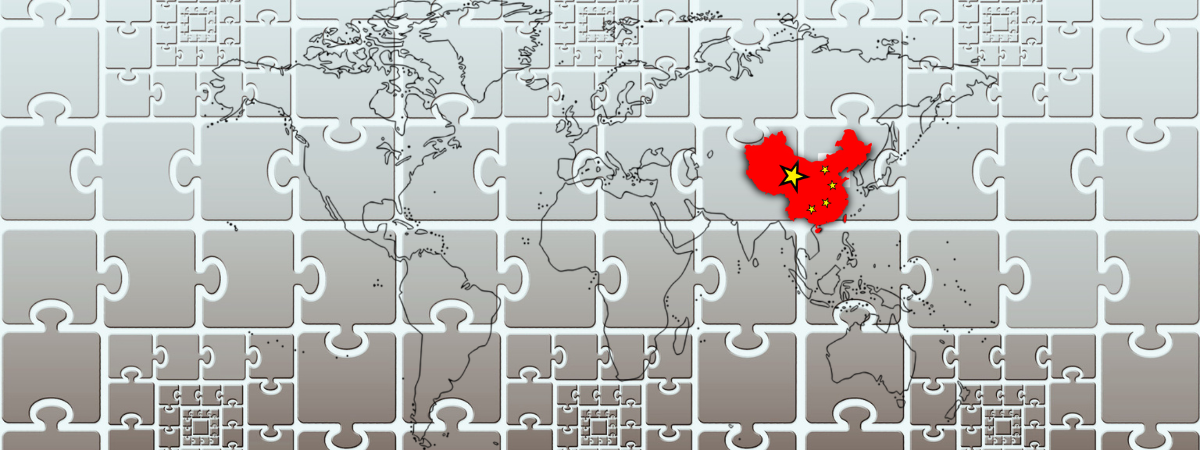
China has embarked on a global investment policy, where the other players are faced with the usual fears of a giant that is putting together the pieces of a puzzle that has been assembling for many years, as if it were a perfectly woven spider’s web:been assembling for many years, as if it were a perfectly woven spider’s web:
- Tariffs and trade barriers.
- The risk of other alliances prolonging an indefinite trade war.
- The tightening of investment policy by Brussels due to security concerns.
- Pressure to decouple from China in certain supply chains could also affect investment.
And all this wrapped up in a presentation to society alongside RUSSIA AND INDIA, in response to TRUMP, which leaves many organizations, countries, people, and companies unsure of where they fit into this global puzzle.
Returning to the story of the path taken by China to formally establish itself, and in this specific case, in Spain:
On May 2, 2021, a new AGREEMENT BETWEEN SPAIN AND CHINA came into force, representing a unique opportunity to develop business and investment between the two countries, to avoid double taxation, and to regulate the taxation of transitional investments, as well as preventing tax elusion and evasion, eliminating obstacles that have been pending for years, and opening up the possibility of diversifying investments at a historic moment when it is necessary to revitalize the economy.
Other SPECIFIC AGREEMENTS are added in areas that facilitate the flow of products, facilitating exports and reciprocal investment, as well as cooperation in science, education, and culture (for example, in cinema for the realization of joint projects).
And the Canary Islands?
If we look at the Canary Islands, our common ground, or rather, if we analyze how China is approaching the Canary Islands, we can understand that the islands may be one of those fundamental pieces:
XI JINPING has set his sights on the Canary Islands as a SPRINGBOARD for Africa (in terms of infrastructure, communications, electricity, and gas, to name a few areas of interest), in addition to investments in hotels and other strategic businesses, not to mention his participation in the purchase of African public debt (which has risen FROM 2% IN 2005 TO 20% TODAY) with a promise to invest 50.000 MILLION over three years, at a time when the United States has eliminated aid to Africa.
THE CANARIAN SINGULARITY is the gateway to capturing the Asian giant, as it is the best territorial area in all of Europe for its application.
¿Why the Canary Islands?
As an outermost region, the Canary Islands benefit from the EFR (Economic and Fiscal Regime), with extraordinary financialandtax related instrumentsthat allow for the lowest taxation in Europe (4%), the reinvestment of taxes (90% of the tax base) in their own or third-party companies, and many other incentives, as well as innovative companies in which to invest.
This is what can be called THE CANARIAN SINGULARITY, marking a turning point for the RED DRAGON, as it entails:
- Complete legal security.
- Political Stability.
- Geographical positioning of the Islands as a meeting point between three continents (Europe, Africa, and America).
- Quality of the investment market and in different sectors.
- Very competitive costs.
- Local talent.
Chinese investment in our country has skyrocketed, and China considers Spain, in addition to Africa, as a BRIDGE TO EUROPE.
How to pay the lowest taxes of all Europe?
Chinese investors can also benefit from the 4% corporate tax rate by establishing themselves in the ZEC, subject to basic requirements, whether for their headquarters, branches, factories, offices, or workshops, and in a wide range of sectors.
How to reinvest?
The Canary Islands Economic and Tax Regime also allows savings of up to 90% of the tax base thanks to the RIC, making it a unique and extraordinary source of reinvestment, as the profit can be used to finance the company itself or third-party companies.
In addition to offering a wide range of options, it allows for the payment, for example, of jobs charged to tax savings or investment, not only in the Canary Islands but also in Africa.
It can also be applied through personal income tax for individuals, in this case at a rate of 80%.
What has China invested in the Canary Islands?
In the last few years, there have been some investments focused especially on tourism (for example, the purchase of BARCELÓ SANTIAGO DE TENERIFE by the CHONGQING KANGDE INDUSTRIAL group) or on businesses associated with ports, tourism, or investment in different sectors of interest, such as the logistical expansion of CAINIAO, the arm of ALIBABA, or the OMODA and JAECCO brands through the RAFAEL AFONSO GROUP.
Today, other initiatives are being carried out in the Canary Islands that allow large amounts of capital to be invested on very advantageous terms in companies in the following sectors:
- Knowledge economy.
- Energy companies.
- Licenses, trademarks, patents.Tecnología.
- Audiovisual.
- Internet platforms.
- Commercial trading.
- eLearning.
- Hotel infrastructure.
Are there any businesses where China can invest in the Canary Islands?
- CANALUZ, a 100% Canarian company that sells electricity and is now expanding its business lines to gas, power generators, and platforms in the rest of Spain, Portugal, Italy, and Morocco.
- The SINGULAR.FUND platform, focused on the world of financing and project development globally, with service providers who establish dialogue between parties, taking into account the orange economy and social impact, as well as an international financial-fiscal comparison tool with “La Singularidad Canaria” as its core.
- SUMMAX, a social and commerce platform based on the concept of shared business.
According to EL ECONOMISTA, Spain expects 25% of China’s €30 billion investment, and the Canary Islands could be the perfect hub for investments (soft loans, development funds, export support, and investment promotion).
The audiovisual industry has developed spectacularly over the last ten years in the Canary Islands, and today it is one of the world’s filming destinations, with HOLLYWOOD productions and investment projects that enable the development of the entire technical and artistic industry, which is essential for any production.
How to make investments?
TODO ES SINGULAR has specialized professionals, as well as financial and tax instruments and tools, together with collaborators from different sectors, offering a turnkey service with a significant portfolio of investment projects, both its own and those of third parties.
Finally, one detail that is often overlooked: China played a key role in the establishment of the United Nations and contributed to the Allied victory, despite profound human sacrifice, although this has been overlooked in Western accounts.
Of course, their story also has inconsistencies and highly debatable issues. We are aware of this, and we also know that they are seeking to remedy them.
We look forward to seeing you. 大家好
*This post is the property of TODO ES SINGULAR, S.L. (https://todoessingular.com/en/) and the information contained herein may be used by third parties with the express written authorization of the source.